

ロードセルの世界ランキング:主要10種類の比較
Global Load Cell Ranking: Top 10 Types by Engineering Use
The highest-ranked load cell types for broad industrial use are shear beam, single-point, compression column, S-type, double-ended shear beam, bending beam, spoke, load pin, miniature, and multi-axis load cells. This ranking compares overall application coverage rather than claiming that one sensor structure is universally superior.
What Does a Global Load Cell Ranking Mean?
Load cells are not consumer products that can be ranked by one universal performance number. A single-point sensor designed for a compact platform, a compression column used beneath a truck scale, and a six-axis sensor used in robotics solve fundamentally different measurement problems.
The ranking on this page evaluates load cell structures according to overall industrial applicability. A higher position indicates broader use across weighing, force measurement, automation, machinery, process equipment, and system integration. It does not mean that the higher-ranked structure will outperform a specialized sensor in every application.
Direct interpretation: shear beam and single-point load cells rank highly because they serve many common industrial weighing applications. Multi-axis load cells rank lower in overall applicability because they are more specialized, not because their technology is less advanced.
How Were the Load Cell Types Ranked?
The composite score uses seven engineering dimensions. The score is an editorial comparison tool rather than a laboratory test, sales-volume report, certification class, or market-share calculation.
Application Coverage
Number and diversity of weighing, testing, control, lifting, and automation applications.
Weight: 25%Installation Adaptability
Ability to fit platforms, vessels, machines, frames, suspended systems, joints, and compact equipment.
Weight: 15%Capacity Scalability
Suitability across light, medium, heavy, and structural load ranges.
Weight: 15%Force-Direction Utility
Capability for compression, tension, bidirectional, shear, pin, or multi-component measurement.
Weight: 10%Dynamic Suitability
Practical usefulness in packaging, checkweighing, machinery, impact, cyclic loading, and moving systems.
Weight: 10%System Integration
Compatibility with indicators, junction boxes, amplifiers, controllers, digital outputs, and communication systems.
Weight: 10%Customization Potential
Ability to adapt dimensions, capacity, materials, mounting, cable, connector, output, and installation layout.
Weight: 15%Composite Score
Weighted total used only to compare overall industrial usefulness under the disclosed methodology.
Maximum: 100 pointsThe ranking does not compare individual product models. Actual performance depends on rated capacity, accuracy specification, installation, loading conditions, environment, electronics, calibration, and manufacturer data.
Top 10 Load Cell Types Worldwide
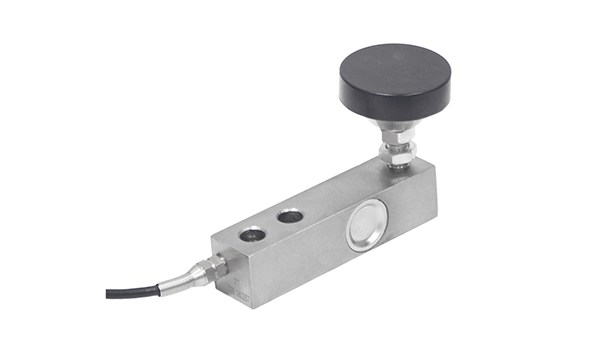
Shear Beam Load Cell
Best overall industrial load cell type
The shear beam load cell ranks first because it combines broad industrial use, a relatively low installation profile, multiple-sensor compatibility, and practical integration with tanks, hoppers, platforms, batching systems, process equipment, and weighing modules.
One end of the beam is normally fixed while force is introduced through the loading area. The measuring section is shaped so that the strain gauges respond primarily to shear deformation. This design can reduce sensitivity to certain changes in load position, although secondary forces and mounting conditions still affect the result.

Single-Point Load Cell
Best for compact and dynamic platform weighing
The single-point load cell ranks second because one sensor can support a suitably sized platform while compensating for a defined amount of off-center loading. This simplifies the mechanical and electrical design of bench scales, compact platforms, packaging machinery, filling equipment, and checkweighing systems.
The structure is especially useful when installation simplicity and weighing speed are important. One sensor also eliminates the junction-box trimming required by many four-cell platforms. Its principal restriction is that the allowable platform dimensions and eccentric loading are limited by the specific model.

Compression Column or Canister Load Cell
Best for heavy-capacity weighing
Compression column and canister load cells rank third because they provide a direct axial load path for heavy platforms, silos, truck scales, large vessels, structural supports, and high-capacity industrial weighing systems.
Their compact footprint relative to the applied force makes them useful where substantial compression must be measured beneath a limited support area. The installation must control alignment, foundation conditions, lateral movement, rotation, and uneven load distribution.

S-Type Load Cell
Best general-purpose tension and compression type
The S-type load cell ranks fourth because it commonly supports both tension and compression measurement through a compact body with accessible upper and lower threaded connections. It is used in suspended weighing, material testing, hanging systems, force verification, and machinery.
The bidirectional capability makes the S-type structure more versatile than a compression-only sensor. However, threaded connections can introduce bending or twisting when the fixtures are not aligned. Rod ends or other alignment hardware may be required.

Double-Ended Shear Beam Load Cell
Best for large platforms and vessel weighing
A double-ended shear beam is supported at both ends and loaded near the center. It ranks fifth because it combines heavy-load capability with a beam structure suited to large platforms, vessels, silos, truck scales, bulk weighing, and industrial modules.
The design can provide a practical alternative to multiple smaller beams or certain canister arrangements. Its performance depends heavily on the associated mounting assembly, rocker or pin arrangement, restraints, vessel movement, and foundation geometry.

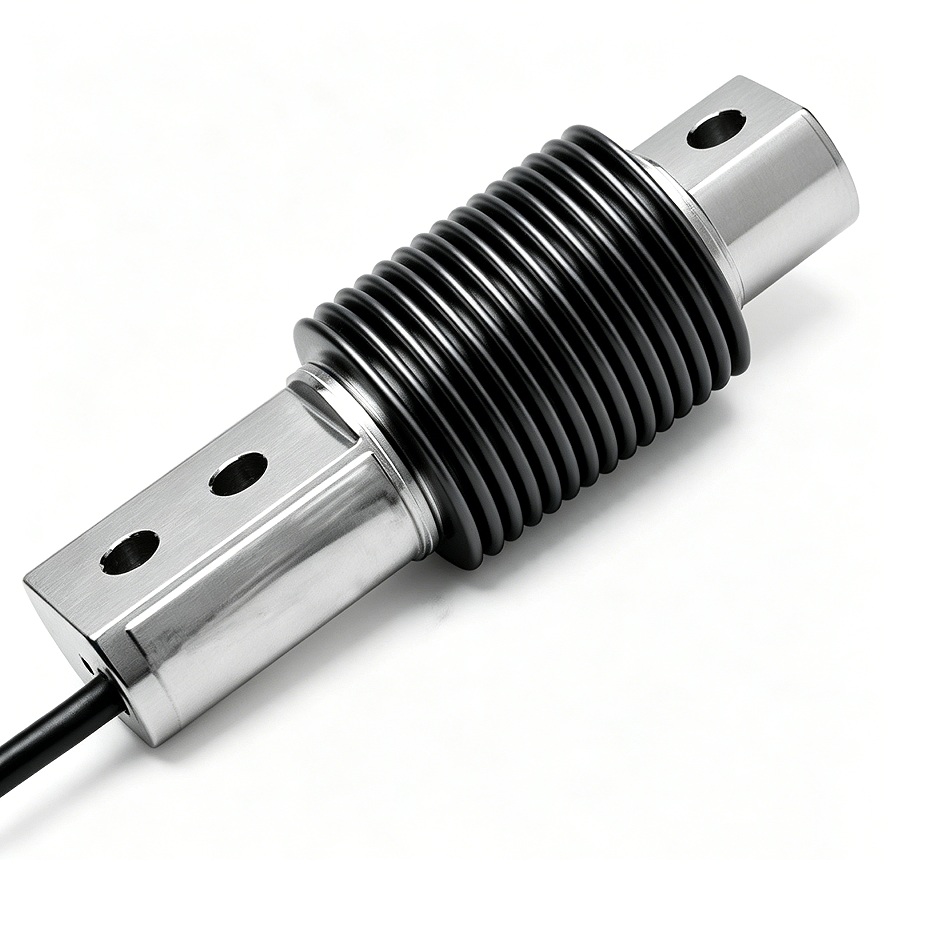
Bending Beam or Bellows Load Cell
Best for process weighing and medium-duty machinery
Bending beam and bellows-style load cells rank sixth because they provide a practical structure for packaging, filling, small vessels, process equipment, conveyors, platforms, and moderate-capacity industrial systems.
Bending beam structures generate measurable strain through controlled beam deflection. A bellows section may provide mechanical protection around the measuring area. The final environmental resistance depends on the complete sealing, cable entry, material, and product construction.
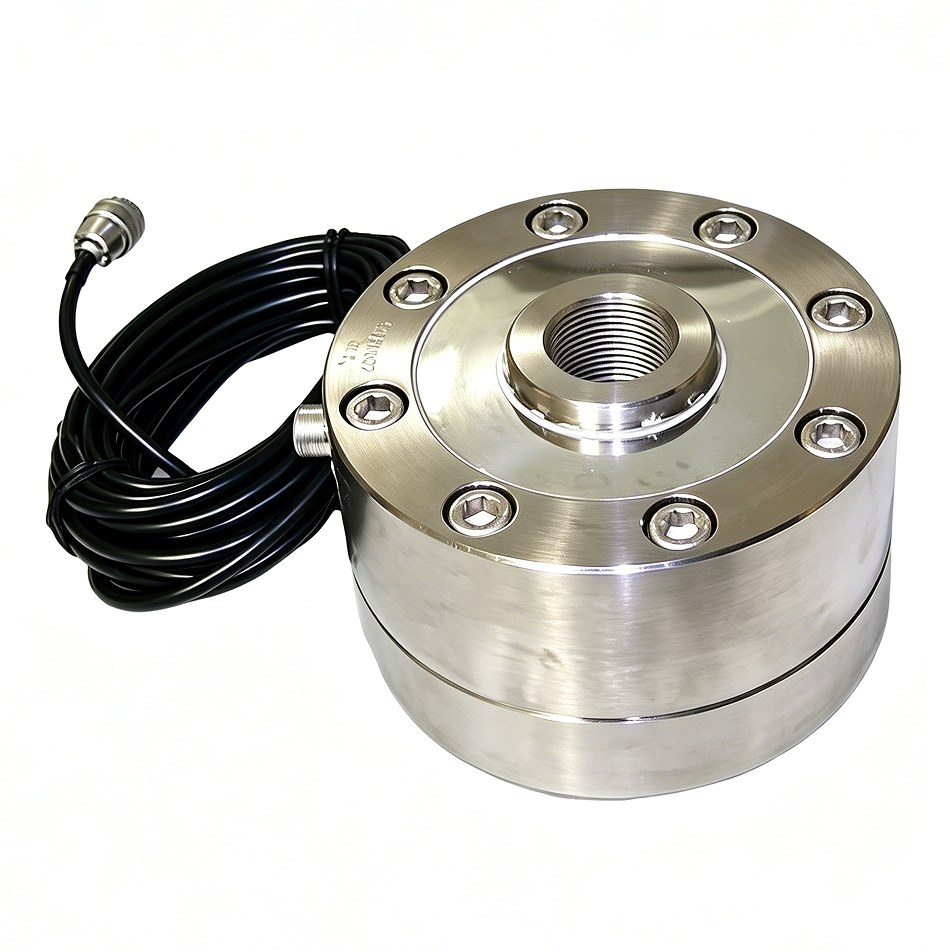
Spoke or Pancake Load Cell
Best for presses, test systems, and low-profile force measurement
Spoke and pancake load cells rank seventh because their low-profile circular structure is well suited to presses, material test machines, force-control systems, test benches, structural verification, and machinery with limited vertical space.
Radial webs or spokes create controlled strain around the central loading area. The design can provide useful stiffness and symmetry, but it requires flat mounting surfaces, correct bolt patterns, central loading, and suitable fixture rigidity.
Load Pin Load Cell
Best for pulleys, cranes, clevis joints, and structural pins
The load pin ranks eighth because it can introduce force measurement directly into a pin, pulley, clevis, shackle, crane, hoist, lifting structure, or machine joint. This can reduce the need to redesign the complete load path around a separate sensor.
Load pins are highly application-specific. Bearing positions, support spacing, load direction, locking method, cable exit, rotation, lubrication, surface contact, and original pin dimensions can all affect the design.

Miniature, Capsule, or Load Button Load Cell
Best for restricted installation space
Miniature, capsule, and load-button sensors rank ninth because they bring force measurement into compact machines, tools, test fixtures, robotic systems, embedded assemblies, and locations where a conventional industrial load cell cannot fit.
Miniature describes the size and installation condition rather than one universal working principle. A miniature sensor may use compression, tension, beam, capsule, button, annular, or multi-axis construction. Limited dimensions also make cable routing, alignment, mounting-surface quality, overload protection, and service access especially important.

多軸ロードセル
Best for robotics and multidirectional force measurement
The multi-axis load cell ranks tenth in overall industrial coverage but first in multidirectional measurement. It can measure several force components and, depending on the structure, several moment components within one integrated sensor.
Multi-axis sensors are used in robotic wrists, grippers, polishing, grinding, assembly, structural testing, force-control systems, mechanical research, and complex test benches. Their lower overall score reflects narrower application coverage, more complex calibration, cross-axis analysis, higher data requirements, and more demanding integration.

Top 10 Load Cell Types Comparison Table
| Rank | Load Cell Type | Score | Main Force Direction | Best Applications | Principal Strength | 主な制限事項 |
|---|---|---|---|---|---|---|
| 1 | せん断ビーム | 92 | Vertical load producing shear | Tanks, hoppers, platforms, batching | Broad industrial coverage and low-profile installation | Mounting and side-force control remain essential |
| 2 | 単一点 | 89 | Compression through a platform | Bench scales, packaging, checkweighing | One sensor supports a suitably sized platform | Platform dimensions and eccentric loading are limited |
| 3 | Compression column or canister | 87 | 圧縮 | Truck scales, silos, large vessels | Heavy-load scalability and direct load path | Alignment and foundation conditions affect performance |
| 4 | S型 | 85 | Tension and compression | Suspended systems, test machines, hanging scales | Bidirectional force measurement | Threaded connections can introduce bending or twisting |
| 5 | Double-ended shear beam | 83 | Central compression loading | Truck scales, silos, large tanks | Heavy platform and vessel weighing | Requires a carefully engineered mounting assembly |
| 6 | Bending beam or bellows | 81 | Beam bending or compression | Filling, packaging, conveyors, process weighing | Compact and practical for medium-duty processes | Lower heavy-load scalability |
| 7 | Spoke or pancake | 79 | Compression or bidirectional | Presses, test benches, force control | Low-profile circular force measurement | Requires flat surfaces and central loading |
| 8 | ロードピン | 76 | Pin or structural shear loading | Pulleys, cranes, clevis joints, shackles | Integrates measurement into an existing joint | Usually requires project-specific mechanical design |
| 9 | Miniature, capsule, or button | 74 | Depends on internal structure | Compact machines, tools, fixtures, embedded systems | Fits restricted installation spaces | Alignment, cable clearance, and overload space are limited |
| 10 | 多軸 | 72 | Several force and moment axes | Robotics, structural testing, research | Multidirectional measurement in one structure | Complex calibration, electronics, and data integration |
Which Load Cell Ranks First for Each Application?
The overall ranking should be replaced by an application-specific ranking when the installation and measurement objective are known.
| 用途 | First Choice to Evaluate | Alternative Types | Why It Ranks First | Critical Engineering Check |
|---|---|---|---|---|
| Compact platform scale | 単一点 | Small bending beam | One sensor can support a suitably sized platform | Platform dimensions and off-center-load limit |
| Industrial platform | せん断ビーム | Compression column, double-ended beam | Low-profile multi-point system with broad industrial use | Frame stiffness and load distribution |
| Tank or hopper weighing | せん断ビーム | Compression, S-type, double-ended beam | Strong process-weighing and module integration | Pipes, thermal movement, restraints, and support count |
| Truck scale | Compression column | Double-ended shear beam | Heavy-load capability with a direct support path | Foundation, alignment, traffic loading, and calibration |
| Suspended hopper | S型 | テンションリンク | Accessible tension measurement through aligned connections | Bending, rotation, thread alignment, and safety restraints |
| Packaging and filling | 単一点 | Bending beam, bellows | Compact integration and useful dynamic response | Cycle speed, vibration, impact, and filtering |
| Press-force measurement | スポーク | Capsule, compression column | Low-profile direct force measurement | Tool alignment, flatness, impact, and frame stiffness |
| Pulley or clevis joint | ロードピン | テンションリンク | Measurement is integrated into the structural pin | Bearing locations, rotation, locking, and cable exit |
| Limited installation space | Miniature capsule | Miniature button, compact spoke | Reduced sensor dimensions | Loading surface, cable clearance, alignment, and overload |
| Robotic wrist | 多軸 | Single-axis miniature sensors | Several force and moment components are measured together | Coordinate axes, stiffness, cross-axis response, and sampling |

Which Load Cell Names Should Not Be Ranked as Parallel Types?
Load cell terminology combines several classification systems. Some names describe mechanical structure, while others describe size, material, environment, signal processing, or safety configuration.
Miniature Load Cell
Miniature describes reduced physical size. A miniature sensor may use compression, tension, capsule, button, beam, washer, or multi-axis construction.
Digital Load Cell
Digital describes signal conversion or communication. A shear beam, single-point, column, S-type, spoke, or other structure may have digital output.
Explosion-Proof Load Cell
Explosion-proof describes an environmental and safety configuration, associated equipment, and installation requirement rather than one mechanical measuring principle.
Stainless Steel Load Cell
Stainless steel describes construction material. It does not define whether the sensor is a beam, column, S-type, spoke, pin, washer, or capsule.
Wireless Load Cell
Wireless describes the data-transmission arrangement. The mechanical sensor can still use tension, compression, pin, beam, or multi-axis construction.
High-Temperature Load Cell
High-temperature describes an application configuration involving materials, gauges, cable, insulation, compensation, sealing, and electronics suitable for a defined temperature condition.
One product may belong to several categories at the same time. For example, a product can be a miniature compression load cell with stainless steel construction, sealed protection, and digital output.
How Should Buyers Use This Load Cell Ranking?
Use the ranking to identify the first structures worth evaluating, then complete the engineering selection using the actual application data.
Measurement Requirements
- Application and purpose of the reading
- Compression, tension, shear, pin, or multi-axis force
- Normal working load and maximum possible load
- Static, cyclic, impact, or dynamic operation
- Required accuracy, repeatability, resolution, and response
Mechanical Requirements
- Available installation space
- Mounting holes, threads, pins, flanges, and supports
- Loading surfaces and intended force path
- Side force, bending, torque, and eccentric load
- Platform, vessel, foundation, or machine stiffness
Environmental Requirements
- Operating and storage temperature
- Water, washdown, dust, chemicals, and corrosion
- Outdoor exposure, condensation, and flooding risk
- Vibration, shock, electrical noise, and lightning
- Hazardous-area requirements where applicable
Electrical and Commercial Requirements
- Analog, digital, RS485, 4–20 mA, or wireless output
- Cable length, connector, amplifier, and junction box
- Indicator, controller, software, and communication interface
- Calibration, identification, and documentation
- Prototype quantity, annual volume, labeling, and delivery
Procurement rule: send every shortlisted manufacturer the same drawing, force direction, working load, maximum load, environment, output requirement, calibration scope, quantity, and acceptance criteria. Quotations are not directly comparable when the technical scope differs.
特注ロードセルおよび計量システムのサポート
Ningbo SAINTBOND Intelligent Technology Co., Ltd. supplies compression column, shear beam, single-point, S-type, tension, spoke, pin-type, bellows, bridge, capsule, miniature, washer, and multi-axis load cells. Related products include tension sensors, portable axle scales, weigh-in-motion systems, crane scales, industrial scales, and weighing indicators.
Project evaluation can include force direction, capacity, dimensions, mounting layout, material, cable, connector, environmental conditions, and signal output. Available integration arrangements can include analog, digital, RS485, 4–20 mA, wireless, weighing indicator, junction box, and customized communication interfaces.
The development process can include requirement review, mechanical structure evaluation, 3D modeling, circuit adaptation, rapid prototypes, calibration, signal-stability testing, sample validation, batch production, product identification, and traceability. A custom design should be selected only when a standard product cannot meet the verified mechanical, electrical, environmental, or production requirements.
要件レビュー
Confirm force direction, capacity, accuracy target, dimensions, environment, signal, accessories, and quantity.
Mechanical Evaluation
Review loading surfaces, support geometry, mounting holes, threads, pin dimensions, cable exit, and available space.
シグナル統合
Match analog, digital, RS485, 4–20 mA, wireless, indicator, junction box, controller, and software requirements.
生産検証
Apply material inspection, process checks, signal testing, calibration, identification, documentation, and shipment traceability.
Prepare a Load Cell Project for Technical Review
Provide the application, force direction, working load, maximum load, dimensions, mounting method, environment, output, cable, connector, instrument, quantity, and equipment drawing.
SAINTBONDをご覧くださいFrequently Asked Questions About Load Cell Rankings
What is the highest-ranked load cell type?
The shear beam load cell ranks first for overall industrial applicability because it serves tanks, hoppers, platforms, batching systems, floor scales, and process equipment. It is not automatically the best choice for compact bench scales, robotic wrists, structural pins, or tension-only systems.
Is there an official worldwide load cell ranking?
There is no universal official ranking that places every load cell structure in one order. Metrological documents establish requirements and test methods, while practical selection depends on force direction, capacity, mounting, application, environment, output, and calibration.
Why does the single-point load cell rank second?
The single-point load cell ranks highly because one sensor can support a suitably sized platform and tolerate a defined amount of off-center loading. This simplifies compact scales, packaging systems, checkweighers, and filling equipment.
Which load cell ranks first for tank weighing?
The shear beam load cell is the first structure to evaluate for many tank and hopper systems. Compression, double-ended shear beam, and S-type sensors may rank first when the vessel is very heavy, suspended, or installed in a different support arrangement.
Which load cell ranks first for truck scales?
Compression column and double-ended shear beam load cells commonly rank first for truck-scale evaluation because both structures can support heavy platform loads. Foundation design, vehicle movement, mounting, drainage, protection, and complete-system calibration remain critical.
Which load cell ranks first for tension measurement?
The S-type load cell ranks first for general-purpose tension and tension-compression measurement. Tension links, load pins, rope sensors, and custom structures may be more suitable for cranes, hoists, shackles, cables, or structural joints.
Why is a multi-axis load cell ranked tenth?
A multi-axis load cell ranks tenth only in overall application breadth. It ranks first when several forces or moments must be measured together. Its specialist nature, calibration matrix, synchronized channels, software, and integration requirements reduce its general-purpose score.
Is a digital load cell included as a separate ranking type?
No. Digital describes signal conversion or communication rather than mechanical structure. A shear beam, single-point, compression, S-type, spoke, miniature, or multi-axis load cell can use digital electronics.
Is an explosion-proof load cell a separate mechanical type?
No. Explosion-proof describes a safety and environmental configuration, including associated electronics and installation requirements. The underlying mechanical sensor may still be a shear beam, compression, S-type, tension, pin, or another structure.
Which load cell is best for limited installation space?
A miniature capsule, button, compact spoke, or custom sensor is usually evaluated first where installation space is restricted. Exact height, diameter, loading surfaces, cable exit, connector clearance, alignment, and overload protection must be defined.
Can a lower-ranked load cell be the best product?
Yes. A lower-ranked specialist sensor can be the correct engineering choice for its intended application. A load pin may be superior in a pulley joint, a miniature sensor in a compact fixture, and a multi-axis sensor in a robotic wrist.
What information is needed before selecting a load cell?
Provide the application, force direction, working load, maximum load, static or dynamic behavior, accuracy requirement, installation dimensions, mounting method, side forces, environment, signal output, cable, connector, indicator, calibration, quantity, and equipment drawing.
Ranking scores describe overall application breadth under the published method. They do not represent market share, sales volume, certification status, measured accuracy, product price, or a guarantee of suitability.
ポータブル軸重計、産業用ロードセル、力センサー、計量表示器、動的測定システムをお探しですか?お客様のプロジェクトに最適なソリューションをご提案いたします。
メーカー直販価格をご利用いただけるとともに、当社の専門家による技術サポートを24時間以内にご提供いたします。.
お見積もりのご依頼 English
 Arabic
 Russian
 Portuguese
 Spanish
 Japanese
 German