

100 Ton Load Cell | Ningbo SAINTBOND Intelligent Technology
Reference Standard: Buyer-defined load-cell verification, metrology, and acceptance procedures appropriate to the complete measurement system.
A 100 ton load cell price should not be evaluated as a sensor-only number. For most industrial measurement projects, the commercially meaningful figure is the total amount required to purchase, integrate, verify, operate, support, and eventually modify or replace the measurement solution.
Ningbo SAINTBOND Intelligent Technology Co.,Ltd., located at No.25-7 Gangxi Avenue,Baoshui District, Ningbo,China, provides this article as general sourcing education. The available evidence does not verify a specific 100 ton load cell product, specification set, availability statement, or price from the company. Buyers should therefore treat the discussion below as a project-budget framework rather than a quotation for a particular model.
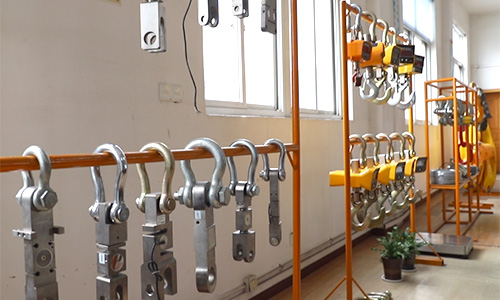
100 Ton Load Cell Price: Budget Beyond the Sensor
The headline sensor quotation is only one part of the purchasing decision. A useful comparison separates the sensing item from integration, verification, documentation, service, change-control, and replacement-related costs before competing offers are judged economically comparable.
A low initial quotation can still produce a higher completed-project cost if important responsibilities remain with the buyer. Conversely, a higher initial amount may include work or deliverables that would otherwise require engineering hours, external services, additional purchasing, or later rework.
For budgeting purposes, divide the project into several cost categories:
| Budget category | What buyers should clarify |
|---|---|
| Sensing item | Exactly what item or configuration the quotation covers |
| Mechanical integration | Who handles mounting, fixtures, structural adaptation, and related installation work |
| Electrical integration | Who connects the sensing system to the required electronics, controller, indicator, or data-acquisition environment |
| Verificación | Who performs reference checks, scaling confirmation, acceptance activities, or other buyer-required validation |
| Documentation | Which drawings, records, reports, certificates, instructions, or traceability documents are included |
| Service | What technical support, troubleshooting assistance, repair handling, or return process is available |
| Future changes | Who bears the cost of revalidation after fixture, controller, software, or process modifications |
| Replacement planning | Expected commercial arrangements for spare units, replacement logistics, and configuration continuity |
This cost map is deliberately independent of any particular 100 ton sensor design. Different projects assign responsibilities differently, so buyers should avoid treating an unspecified category as automatically included or automatically free.
The purchasing team should also distinguish known cost, excluded cost, optional cost, and unknown cost. Unknown items deserve special attention because they frequently become unplanned expenditure after approval. Recording an unresolved responsibility as “to be confirmed” is more useful than silently assigning it a zero value.
Separate Purchase Price From Integration and Verification Costs
The purchase amount answers only one commercial question: what must be paid for the quoted sensing item and whatever the supplier explicitly includes with it?
The project budget asks a larger question: what must the organization spend before the measurement system can enter usable service?
Mechanical work may require internal engineering, fabrication, installation labor, or adaptation of existing equipment. Electrical and controller integration may consume automation or instrumentation resources. Verification may involve reference equipment, engineering time, controlled loading arrangements, data review, or documentation required by the buyer’s own quality process.
The purpose of identifying these items is not to prescribe a universal installation procedure. Instead, the buyer should establish responsibility boundaries before comparing commercial offers.
For each candidate quotation, ask:
- Is the quoted amount limited to the sensing item?
- Are mounting-related components or integration services included, optional, or excluded?
- Who is responsible for connecting the measurement chain to the buyer’s existing equipment?
- Is system setup included, or does the buyer complete it internally?
- Are verification or acceptance activities included?
- What documentation will be delivered?
- Are engineering discussions included in the quoted scope?
- Which activities require separate purchasing or third-party support?
Two quotations with similar headline values can therefore produce very different project budgets. Supplier A may quote only the sensing component while Supplier B may include additional engineering or documentation. Comparing those two numbers without normalizing responsibility creates a misleading impression of cost.

A useful commercial worksheet should assign an owner to every activity: supplier, buyer, system integrator, contractor, or third party. Once responsibilities are visible, the procurement team can estimate internal labor and external spending rather than evaluating the acquisition price in isolation.
Documentation can also have real budget impact. Drawings, configuration records, verification results, service information, and traceability documents may affect how easily a system can be accepted, maintained, investigated, or modified later. Buyers should therefore identify required deliverables at the inquiry stage rather than assuming they will automatically accompany the hardware.
Future Service and System-Change Costs Before Approval
Industrial measurement systems continue generating costs after installation. A stronger price comparison therefore includes lifecycle exposure, even when future expenditure cannot yet be quantified precisely.
The first category is buyer-required verification. An organization’s quality system may require periodic checks, documented confirmation after maintenance, or additional validation after significant changes. The frequency and method depend on the application and the buyer’s own requirements, so they should not be assumed from the capacity keyword alone.
The second category is troubleshooting support. When a measurement problem appears, the cost may include engineering time, production interruption, inspection, external technical assistance, shipping, repair handling, or replacement. Procurement teams should understand in advance how responsibilities are divided when support is needed.
The third category is spare-unit strategy. Some projects accept replacement lead time when a component fails; others need a spare available locally because downtime is expensive. The correct approach depends on operational consequences rather than purchase price alone.
The fourth category is change control. A measurement system that performs acceptably today may later be affected by modifications to fixtures, controllers, software logic, cabling, machine structure, operating sequence, or production process. The commercial question is not merely whether changes are possible. Buyers should consider what engineering, verification, documentation, or replacement expense may follow those changes.
Budget Warning Signs Before Purchase Approval
- Important integration responsibilities are described verbally but do not appear in the quotation or project records.
- Verification, documentation, service, or replacement assumptions remain marked as “included” without a defined deliverable.
- A lower unit price is being compared with a broader offer without accounting for work transferred to the buyer.
A useful lifecycle comparison does not require an invented ten-year cost forecast. It requires transparency. The procurement team can classify future items as expected, conditional, unlikely, or unknown, then decide which categories deserve a contingency allowance.
This approach is particularly valuable when purchasing teams are under pressure to select the lowest visible number. A quotation that transfers integration, support, and revalidation responsibility to the buyer may be commercially appropriate, but those transferred responsibilities should be visible before approval.

Build a Comparable Project-Cost Checklist for Supplier Discussions
The most effective way to compare a 100 ton load cell price inquiry is to give every candidate source the same commercial structure. Suppliers do not need to quote identical solutions, but buyers should be able to identify where the scope differs.
Begin by asking each source to separate the quoted sensing item from related work and deliverables. Then identify exclusions and assumptions explicitly. If a cost cannot yet be established, record it as unknown rather than allowing it to disappear from the comparison.
A project-cost worksheet can use five practical columns:
Category | Included | Excluded | Responsibility | Cost or Status
This simple structure prevents the unit price from becoming the only visible number.
Items to Confirm Before Comparing Final Project Cost
-
Define the quoted item clearly. Record exactly what the quoted amount covers and whether any associated components are included.
-
Separate integration work. Identify mechanical, electrical, controller, data-acquisition, or system-integration activities that sit outside the sensing-item price.
-
Assign verification responsibility. Record who performs buyer-required setup confirmation, reference checks, acceptance activities, and related documentation.
-
List documentation deliverables. Specify drawings, records, configuration information, verification results, instructions, or traceability documents required by the project.
-
Clarify technical-support scope. Determine what assistance is available during integration, troubleshooting, repair handling, or later system modification.
-
Record logistics separately. Keep packaging, freight, insurance, import-related charges, local handling, and other commercial items visible where applicable.
-
Define replacement assumptions. Ask how replacement configurations, spare-unit planning, repair logistics, and future availability should be discussed.
-
Identify change-control exposure. Document who will evaluate and revalidate the measurement system after significant fixture, controller, software, or process changes.
-
Keep unknowns visible. Do not convert unresolved items into assumed zero-cost inclusions.
-
Compare complete project totals. Review the combined acquisition, integration, verification, service, and lifecycle responsibilities before selecting an offer.
This framework also helps procurement teams compare other capacity-related searches such as 100 kg load cell price or 2 ton load cell price without assuming that capacity alone makes two measurement solutions commercially equivalent. The important principle is to compare the complete responsibility package attached to each offer.
Ningbo SAINTBOND Intelligent Technology Co.,Ltd. is verified in the supplied company context as a manufacturer of an extensive portfolio of high-precision load cell variations for industrial force measurement, supporting machine builders, system integrators, and OEM equipment manufacturers. Buyers can review the company’s broader industrial force measurement portfolio or open a general technical and sourcing discussion. That verified company context should not be interpreted as confirmation that a specific 100 ton load cell or corresponding price is currently offered.
¿Necesitas básculas de eje portátiles, células de carga industriales, sensores de fuerza, indicadores de pesaje y sistemas de medición dinámica? ¿Buscas soluciones para tu proyecto?
Disfruta de precios directos de fábrica y de asistencia técnica por parte de nuestros expertos en un plazo de 24 horas.
Solicita un presupuesto rápido English
 Arabic
 Russian
 Portuguese
 Spanish
 Japanese
 German