

Benefits of Load Cells
Benefits of Load Cells: Engineering Advantages, Industrial Value, and Practical Limitations
The main benefits of load cells are direct force measurement, continuous electronic output, repeatable process feedback, automation compatibility, quality-control support, overload monitoring, flexible mechanical integration, and traceable measurement data. These benefits depend on correct capacity selection, force alignment, mounting, environmental protection, signal conditioning, calibration, and maintenance.
What Are the Main Benefits of Load Cells?
Load cells make mechanical force measurable in an electrical system. Their primary benefit is not simply that they produce a weight reading. A properly integrated load cell allows force to be displayed, recorded, compared with limits, used in a control loop, transmitted to other equipment, and reviewed later as part of a production or testing record.
Load cells connect the physical behavior of a machine, structure, vessel, product, vehicle, cable, or lifting system with electronic measurement and control. This connection supports weighing, quality control, process consistency, overload detection, testing, automation, inventory management, and engineering validation.
Measurement
Converts compression, tension, shear, weight, clamping force, or multi-axis loading into usable data.
Control
Provides feedback for filling, batching, pressing, sorting, lifting, positioning, and production decisions.
Verification
Supports inspection, testing, quality records, load confirmation, and comparison with engineering limits.
Integration
Connects mechanical equipment with indicators, controllers, transmitters, communication networks, and data systems.
How Do Load Cells Create Engineering Value?
A load cell creates value by converting a difficult-to-observe mechanical condition into a signal that can be quantified. Without a force sensor, an operator may know that a vessel is heavy, a cable is tight, a press is applying force, or a platform is loaded, but cannot reliably determine how much force is present or how it changes over time.
Once force is converted into an electrical signal, the measurement can be processed in several ways. A weighing indicator can display mass, a controller can stop a filling valve, a test system can record a force curve, a lifting device can compare the load with an alarm threshold, or a robotic system can adjust motion according to measured contact forces.
The value of a load cell is greatest when the measurement is linked to a defined decision: accept or reject a product, start or stop a process, verify a test, monitor a structural load, prevent an overload, calculate inventory, or document a production result.
The sensor should therefore be evaluated as part of a complete measurement chain. Mechanical mounting, signal conditioning, calibration, filtering, communication, display, software, and operating procedure all determine whether the measurement produces useful engineering information.
12 Main Benefits of Load Cells
The following advantages explain why load cells are widely used in industrial weighing, force testing, automation, lifting, transportation, production control, and structural monitoring. Each advantage is conditional on correct product and system design.
Direct Measurement of Mechanical Force
Converts a physical load into a quantifiable electrical response
The fundamental advantage of a load cell is its ability to measure force directly within the mechanical load path. The sensor can be positioned beneath a platform, between two tension connections, inside a structural pin, around a bolt, below a press tool, or between a robotic arm and its end effector.
Direct measurement reduces dependence on indirect estimates based on motor current, hydraulic pressure, displacement, operator judgment, container level, or theoretical calculations. Indirect methods may remain useful, but they can be influenced by friction, temperature, mechanical efficiency, fluid conditions, or unknown structural losses.
Continuous and Real-Time Measurement
Makes changing loads visible during production and equipment operation
A load cell can provide continuous output while the applied force changes. This allows operators and controllers to observe filling progress, press-force curves, vehicle loads, suspended weight, cable tension, clamping force, or process variations as they occur.
Continuous measurement is particularly useful when the final result alone does not describe the process. A press operation may require evaluation of the complete force-versus-time or force-versus-displacement curve. A batching system may need to slow the material feed before reaching the final target. A crane system may need to detect a rapid load increase rather than waiting for a manual inspection.
Support for Automated Process Control
Converts force measurement into control actions and production decisions
Load cells can be connected to weighing indicators, programmable controllers, transmitters, data-acquisition systems, and industrial communication networks. The measured value can start or stop equipment, adjust a feed rate, control a valve, trigger an alarm, reject a product, or record a completed production cycle.
In filling and batching systems, load feedback can control coarse and fine material feed. In assembly machinery, force feedback can confirm that a component has been inserted or pressed correctly. In robotic systems, measured contact force can be used to regulate grinding, polishing, handling, or assembly tasks.
Improved Process Consistency
Helps repeat filling, dosing, pressing, clamping, and assembly operations
Industrial processes often require the same amount of material or force to be applied repeatedly. A load cell provides a measurable reference that can reduce dependence on timing alone, operator feel, mechanical stops, or estimated equipment settings.
In a batching process, the same target weight can be applied to each batch. In a press-fit operation, the controller can compare force behavior between parts. In cable production or winding equipment, tension can be monitored instead of relying only on brake or motor settings.
Improved consistency can support more stable downstream processing because the variation entering the next production stage is reduced. However, the load cell measures only the force passing through its structure; it does not automatically control material properties, temperature, tool wear, or fixture variation.
Quality-Control and Product Verification
Provides objective measurement for inspection and acceptance decisions
A load cell can verify whether a package contains the expected quantity, whether an assembly reached the required pressing force, whether a spring or component responds within a defined force range, or whether a mechanical structure carries the expected load.
Force measurements can be linked to product identification, production time, equipment settings, operator information, batch number, or test records. This converts a subjective observation into a documented inspection result.
A force value should not be treated as proof of product quality unless the relationship between force and the required product characteristic has been established. A correct press force, for example, does not independently confirm material composition, dimensions, surface condition, or hidden assembly defects.
Overload and Safety Monitoring
Detects excessive force before or during equipment operation
Load cells are used in cranes, hoists, lifting attachments, structural supports, presses, silos, vehicles, cables, and machinery to monitor loads that may exceed operating limits. The measured signal can activate a warning, stop a movement, restrict operation, or provide information to a supervisory system.
Load pins can measure force inside pulley or clevis joints. Tension links can monitor suspended loads. Compression cells can monitor structural supports. Washer sensors can measure bolt or clamping force. Multi-axis sensors can identify force components that are not visible from one axial reading.
A load cell is not a substitute for independent mechanical safety devices, structural design, brakes, restraints, overload stops, inspection, or applicable safety procedures. Safety-related use requires project-specific engineering, documentation, verification, and fault analysis.

Flexible Mechanical Integration
Multiple structures allow force measurement in different spaces and load paths
Load cells are available in column, beam, single-point, S-type, spoke, pin, bellows, capsule, washer, miniature, and multi-axis structures. This variety allows the measuring element to be integrated into a wide range of equipment without forcing every machine to use the same mounting arrangement.
A single-point sensor can support a compact platform. A shear beam can fit beneath a tank or industrial floor scale. An S-type sensor can be installed in a suspended system. A load pin can replace an existing structural pin. A washer sensor can fit around a bolt. A miniature sensor can fit within a restricted machine envelope.
Measurement Across Diverse Force Ranges and Directions
Supports compression, tension, shear, clamping, pin loading, and multiple axes
Load cells can be designed for small embedded forces, machine assembly forces, platform weighing, tank supports, vehicle loads, lifting systems, heavy structural loading, and multi-directional force measurement. This wide application range is possible because the elastic element can be adapted to different geometries, dimensions, materials, and loading conditions.
Force direction can also be matched to the application. Compression cells measure pushing force, tension cells measure pulling force, S-type designs commonly support both directions, load pins measure structural pin loading, and multi-axis sensors separate several force or moment components.
The existence of many capacity and structure options does not mean one sensor covers every load. Rated capacity, overload conditions, dynamic peaks, fatigue, stiffness, resolution, and mounting arrangement must be reviewed for each project.
Compatibility with Different Output Signals
Allows force data to enter weighing, control, monitoring, and communication systems
Load cells can be connected through raw analog signals, amplified voltage outputs, current-loop transmitters, digital communication, RS485 interfaces, or wireless systems. This flexibility allows the sensor to work with weighing indicators, controllers, test instruments, remote displays, data recorders, and industrial communication networks.
Raw analog output provides flexibility in the selection of external instrumentation. A 4–20 mA signal may be useful for industrial process control and longer cable routes. RS485 can support digital communication and multiple devices. Wireless transmission may be considered where signal cables are difficult to install.
Data Recording and Measurement Traceability
Creates a measurable history of production, testing, weighing, or equipment loading
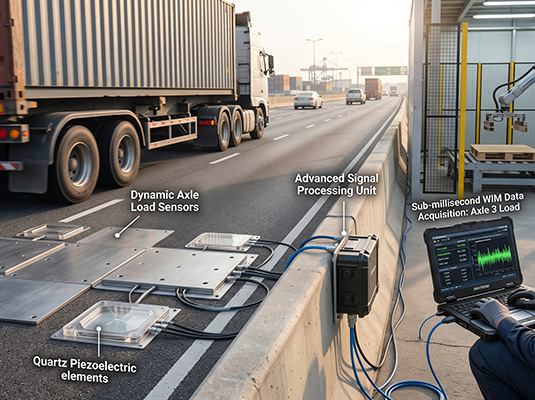
Electronic force data can be recorded with time, product number, batch, test program, machine settings, alarm status, or operator information. This supports investigation of process changes, test comparison, maintenance review, production documentation, and customer or internal quality records.
In a material test, the complete loading curve can be stored rather than only the final force. In a filling system, individual package weights can be recorded. In a lifting system, overload events can be logged. In a tank system, weight changes can support material-use or inventory calculations.
Potential Reduction of Material Waste and Rework
Helps prevent overfilling, underfilling, incorrect force, and uncontrolled variation
Load-cell feedback can help a process approach a defined quantity or force more consistently. Filling and batching equipment can reduce flow as the target is approached. Pressing systems can identify force curves outside the accepted range. Checkweighing can separate packages that do not meet the specified weight condition.
These functions may reduce giveaway, underfilled products, rejected assemblies, repeated testing, damaged components, or unnecessary material use. The actual economic result depends on process capability, material value, production volume, reject cost, maintenance, calibration, and the effectiveness of the control strategy.
A load cell does not guarantee lower cost. An incorrectly selected, mounted, or calibrated system can increase downtime and false rejects. Economic benefit should be evaluated using the complete lifecycle cost of the measurement system.
Support for Custom Equipment and Specialized Research
Allows the sensor structure and signal chain to be adapted to nonstandard projects
Standard load cells do not fit every machine. Custom development can adapt capacity, dimensions, mounting holes, pin geometry, material, cable direction, connector, signal output, communication interface, or installation layout to the equipment.
Custom force sensors are used when the measuring element must become part of a machine joint, robotic wrist, structural test fixture, compact assembly, lifting component, axle-weighing platform, or specialized production tool.
Multi-axis development can also combine several force and moment channels in one structure. This is useful when a single compression or tension value cannot explain the mechanical behavior under investigation.
Load Cell Benefits Comparison Table
The following table connects each load cell advantage with its engineering basis, common applications, required conditions, and principal limitation.
| Load Cell Benefit | Engineering Basis | Common Applications | Required Conditions | Main Limitation |
|---|---|---|---|---|
| Direct force measurement | Elastic deformation is converted into an electrical signal | Presses, scales, tanks, cranes, testing | Force must pass through the intended axis | Bypass loads and side forces can distort the result |
| Continuous monitoring | Electrical output changes with applied force | Batching, lifting, cable tension, automation | Suitable sampling, filtering, and signal conditioning | Fast peaks may be hidden by slow electronics |
| Automated control | Measured value can be used by a controller | Filling, sorting, pressing, robotic control | Compatible output, scaling, logic, and communication | Control performance depends on the complete system |
| Process consistency | Each cycle can be compared with a defined target | Dosing, assembly, clamping, production testing | Stable mechanics and repeatable operating conditions | Force alone may not describe every product variable |
| Quality verification | Objective values replace subjective judgment | Checkweighing, press-fit testing, component testing | Validated acceptance criteria and calibration | A force value may not reveal unrelated defects |
| Overload monitoring | Force is compared with warning or stop limits | Cranes, hoists, silos, machinery, structures | Independent safety design and verified alarm logic | Does not replace mechanical safety protection |
| Flexible installation | Multiple mechanical structures are available | Platforms, bolts, pins, cables, compact machines | Correct structure, mounting, space, and alignment | Physical fit does not guarantee mechanical suitability |
| Signal integration | Analog, digital, current, serial, or wireless output | Indicators, controllers, remote systems | Electrical and communication compatibility | Noise, power, protocol, or latency can affect data |
| Traceable data | Electronic measurements can be stored and linked to records | Testing, production history, inventory, inspection | Identification, calibration, storage, and time records | Poor data management can remove traceability |
| Reduced process loss | Feedback helps control quantity and force | Filling, batching, assembly, sorting | Stable process and correctly designed control strategy | Savings are application-dependent rather than automatic |
| Custom measurement | Mechanical and electrical design can be adapted | OEM machinery, research, robotics, structural systems | Detailed drawings, validation, and production control | Development cost and qualification time may increase |
What Benefits Do Different Load Cell Types Provide?
Different load cell types provide different mechanical advantages. The most useful structure is determined by force direction, installation space, support arrangement, capacity, dynamic conditions, environmental exposure, and required output.
Compression Column Load Cells
Provide a direct axial load path for large platforms, tanks, silos, truck scales, and heavy structural weighing. Correct alignment and support geometry remain essential.
Shear Beam Load Cells
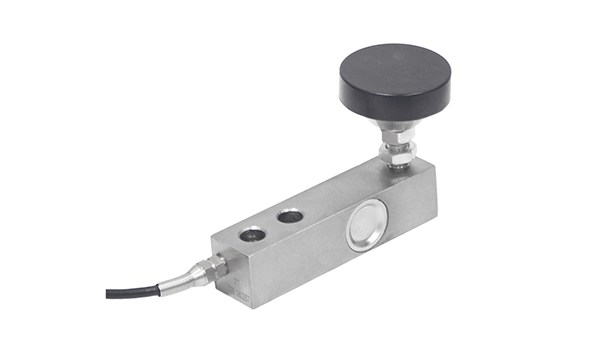
Provide a low-profile structure suitable for industrial platforms, floor scales, tank weighing, hopper weighing, and batching systems.
Single-Point Load Cells
Allow one sensor to support a suitably sized platform and compensate for a defined amount of off-center loading.
S-Type Load Cells
Commonly support tension and compression measurement with accessible threaded connections for suspended weighing and test machinery.
Spoke Load Cells
Provide a low-profile circular structure for press-force measurement, test systems, vessel weighing, and industrial force control.
Load Pin Load Cells
Integrate force measurement into an existing pin, pulley, clevis, shackle, crane, or structural joint without adding a separate load path.
Washer Load Cells
Measure clamping or bolt force around a central opening while fitting around a bolt, shaft, tie rod, or structural fastener.
Miniature Load Cells
Provide force measurement in restricted spaces within tools, fixtures, robotic systems, compact machines, and embedded assemblies.
Multi-Axis Load Cells
Separate several force or moment components within one structure for robotics, structural testing, assembly validation, and mechanical research.


Benefits of Load Cells in Different Applications
The practical value of a load cell changes by application. A platform scale benefits from direct weight measurement, while a robotic system benefits from multi-directional force feedback. The table below organizes the advantages by engineering use.
| Application | Common Sensor Types | Main Benefit | Measurement Use | Critical Installation Factor |
|---|---|---|---|---|
| Platform scales | Single-point Shear beam | Direct electronic weighing of products or materials | Display, counting, sorting, inventory, or process control | Platform stiffness and off-center loading |
| Tanks and hoppers | Shear beam Compression S-type | Continuous material quantity and batch monitoring | Inventory, dosing, filling, discharge, and recipe control | Pipe forces, restraints, thermal expansion, and supports |
| Packaging machinery | Single-point Bellows Miniature | Supports filling, checkweighing, and package verification | Target control, rejection, counting, and quality records | Vibration, cycle speed, product impact, and filtering |
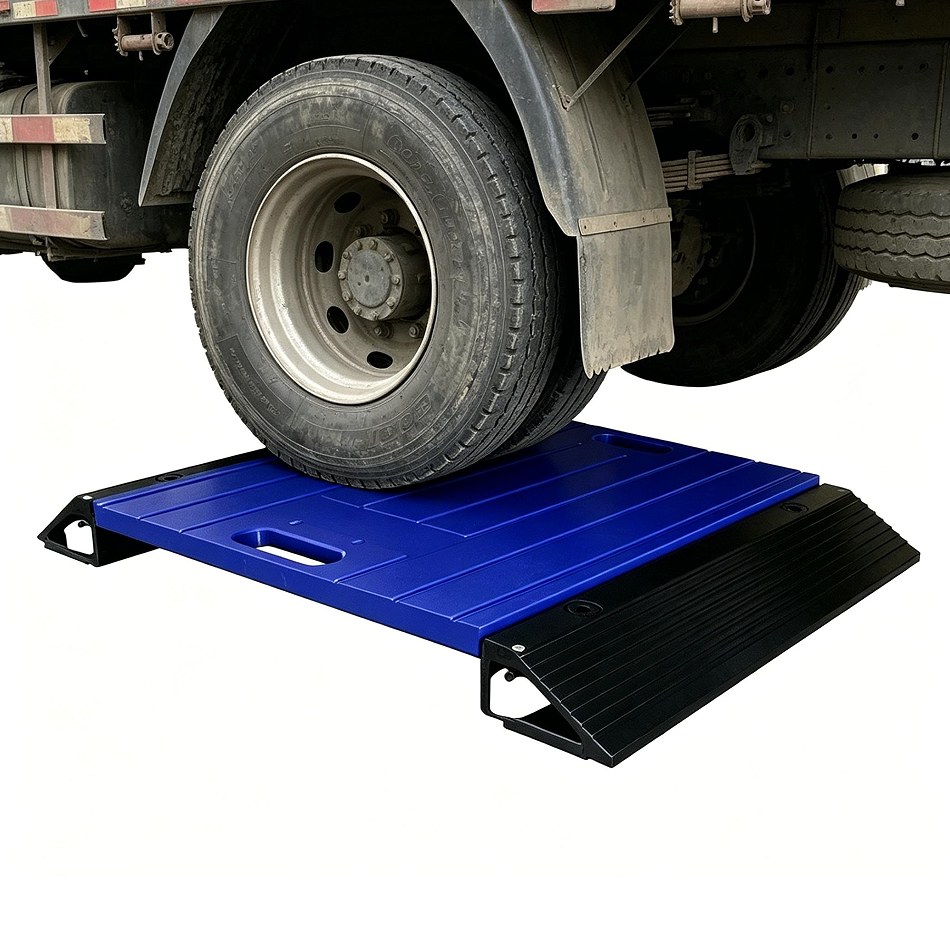
| Truck and axle weighing | Compression Integrated pad sensors | Measures wheel, axle, or gross vehicle loading | Load distribution, transport control, and operational review | Surface level, tire position, movement, and calibration |
| Crane and lifting systems | Tension link Load pin S-type | Provides suspended-load and overload information | Display, warning, logging, or equipment control | Shock, rotation, bending, and attachment geometry |
| Press and assembly machines | Spoke Capsule Compression | Verifies force during pressing or assembly | Process control, curve analysis, and reject decisions | Tool alignment, impact, frame stiffness, and sampling rate |
| Material testing | S-type Spoke Tension | Quantifies mechanical response under controlled loading | Research, inspection, validation, and comparison | Fixture alignment, calibration, loading rate, and data acquisition |
| Robotics | Multi-axis Miniature | Provides force and moment feedback during contact | Assembly, polishing, grinding, handling, and testing | Coordinate definition, stiffness, cross-axis effects, and sampling |
| Bolt and clamping force | Washer Annular | Measures preload around a fastener or shaft | Assembly monitoring and structural verification | Bearing surfaces, tightening method, and load distribution |
| Structural monitoring | Load pin Compression Tension | Tracks loads within supports, joints, anchors, or cables | Inspection, trend review, alarms, and engineering analysis | Long-term stability, environment, installation stress, and calibration |
Operational and Economic Benefits of Load Cells
Load cells can produce operational value by reducing uncertainty in processes that depend on force or quantity. The economic benefit is indirect: the sensor provides data, while the surrounding control and management process determines whether that data reduces cost or improves output.
Material Control
Weight feedback can help reduce overfilling, underfilling, uncontrolled batching, and unnecessary material giveaway.
Reduced Rework
Force verification can identify abnormal pressing, insertion, clamping, or assembly conditions before products continue downstream.
Equipment Protection
Overload monitoring may help prevent some forms of equipment stress or identify abnormal loading before further operation.
Faster Inspection
Electronic measurement can replace or supplement manual weighing and subjective force checks in repetitive operations.
Production Records
Recorded force or weight values can support troubleshooting, batch review, test comparison, and customer documentation.
Inventory Visibility
Tank, hopper, silo, and platform measurements can provide information about material receipt, usage, storage, or discharge.
Lifecycle evaluation should include sensor price, mounting hardware, indicator, cables, junction boxes, installation, calibration, commissioning, downtime, replacement, environmental protection, software, staff training, and long-term maintenance.
What Are the Limitations of Load Cells?
Load cells provide substantial measurement benefits, but they do not operate independently of the surrounding structure and electronics. Their limitations should be considered at the same time as their advantages.
Sensitivity to Mechanical Installation
Side loads, bending, misalignment, flexible structures, uneven foundations, rigid pipes, platform contact, and incorrect mounting can affect readings.
Need for Calibration
The electrical signal must be related to known reference loads. Installation, repair, overload, structural changes, or long-term use may require verification.
Environmental Exposure
Moisture, chemicals, corrosion, temperature, vibration, electrical noise, cable damage, and connector problems can reduce measurement reliability.
Capacity and Overload Limits
Excessive axial force, impact, side loading, torque, or fatigue can permanently deform or damage the elastic element.
Small Raw Signal
Conventional strain-gauge outputs require suitable excitation, amplification, shielding, grounding, filtering, and instrument resolution.
Application-Specific Interpretation
A force measurement is meaningful only when its relationship with product quality, process status, structural load, or safety condition is defined.
Load cell benefits should not be stated as unconditional claims. Measurement quality depends on the sensor, mechanical load path, electronics, calibration, environment, installation, operating procedure, and maintenance.
How to Realize the Full Benefits of a Load Cell
The advantages of load cells are obtained through correct system design rather than sensor selection alone. The following process reduces the risk of losing measurement value through installation or integration errors.
-
Define the measurement objective.
State whether the system measures weight, compression, tension, shear, clamping, structural load, or several force and moment components. -
Confirm the complete force path.
Identify how force enters the sensor and whether any part of the load bypasses the intended measuring structure. -
Select sufficient but usable capacity.
Include dead load, working load, uneven distribution, dynamic peaks, impact, overload, maintenance conditions, and structural movement. -
Choose the correct mechanical structure.
Match column, beam, single-point, S-type, spoke, pin, washer, miniature, or multi-axis geometry to the installation. -
Control side forces and bending.
Use suitable mounting modules, rod ends, loading buttons, restraints, flexible connections, level surfaces, and structural supports. -
Match the environment.
Review temperature, moisture, washdown, dust, chemicals, corrosion, vibration, outdoor exposure, cable protection, and hazardous-area requirements. -
Select compatible electronics.
Confirm excitation, sensitivity, amplifier, indicator, controller input, output range, communication protocol, update rate, grounding, and filtering. -
Calibrate the installed system.
Use suitable reference loads, correct loading direction, relevant calibration points, documented procedures, and traceable product identification. -
Validate the real operating process.
Test the sensor under actual loading speed, vibration, temperature, product movement, cable routing, communication, and control conditions. -
Maintain the complete measurement chain.
Inspect mounting hardware, platforms, cables, connectors, seals, junction boxes, instruments, zero stability, calibration status, and overload history.
Custom Load Cell and Weighing System Support
Ningbo SAINTBOND Intelligent Technology Co., Ltd. supplies load cells, force sensors, multi-axis sensors, tension sensors, portable axle scales, weigh-in-motion systems, crane scales, industrial scales, weighing indicators, and application-specific force measurement products.
The load cell range includes compression column, shear beam, single-point, S-type, tension, spoke, pin-type, bellows, bridge, capsule, miniature, washer, and multi-axis structures. Signal arrangements can include analog, digital, RS485, 4–20 mA, wireless, weighing indicator, and junction-box integration according to project requirements.
Custom evaluation can cover force direction, rated capacity, dimensions, mounting layout, material, cable, connector, output signal, communication method, and equipment integration. Project work may include requirement review, mechanical structure evaluation, 3D modeling, circuit adaptation, prototype development, sample validation, calibration, production testing, and batch manufacturing.
Application Review
Review force direction, load range, dynamics, environment, dimensions, signal, instruments, and quantity.
Mechanical Development
Evaluate structure, mounting, loading surfaces, cable route, connector, accessories, and available installation space.
Signal Integration
Match analog, digital, RS485, 4–20 mA, wireless, indicator, junction box, and controller requirements.
Production Verification
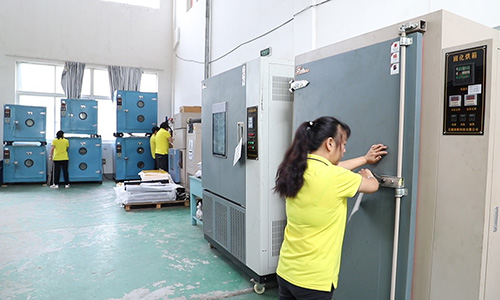
Apply process inspection, load testing, calibration, identification, documentation, and shipment traceability.
Prepare a Load Cell Application for Technical Review
Provide the application, force direction, normal load, maximum load, dimensions, mounting method, environment, output signal, cable, connector, instrument, quantity, and equipment drawing.
Visit SAINTBONDFrequently Asked Questions About Load Cell Benefits
What are the main benefits of load cells?
The main benefits are direct force measurement, continuous electronic output, automation support, process consistency, quality verification, overload monitoring, flexible installation, signal integration, and traceable data. These advantages depend on correct mounting, calibration, environmental protection, and system design.
Why are load cells useful in industrial weighing?
Load cells convert the force applied by products, vessels, platforms, vehicles, or suspended loads into electrical signals. The signals can be displayed, recorded, transmitted, compared with targets, or used to control filling, batching, inventory, sorting, and material-handling processes.
How do load cells improve process control?
A load cell provides measurable feedback to an indicator or controller. Equipment can respond to the measured value by adjusting a feed rate, stopping a filling operation, triggering an alarm, rejecting a product, or recording the completed process result.
Can load cells improve product quality?
Load cells can support product quality by verifying weight, pressing force, insertion force, clamping force, tension, or another defined mechanical condition. The measurement is useful only when the relationship between force and the required product characteristic has been validated.
Can load cells reduce material waste?
Load-cell feedback may reduce overfilling, underfilling, uncontrolled batching, and incorrect assembly force. Actual savings depend on material value, production volume, process capability, control logic, maintenance, calibration, and the cost of rejected or reworked products.
How do load cells support equipment safety?
Load cells can monitor force in cranes, hoists, cables, supports, presses, silos, vehicles, and machines. The measurement may activate warnings or stop logic. It does not replace mechanical safety devices, structural design, inspection, or project-specific safety verification.
What is the benefit of a digital load cell?
A digital load cell or digital measuring system can convert and transmit the measurement close to the sensor, provide communication with controllers, and reduce some analog transmission problems. The protocol, update rate, power, diagnostics, cable system, and compatibility must still be confirmed.
What is the benefit of an RS485 load cell?
RS485 supports digital communication over an industrial serial network and may allow several addressable devices on one communication line. The buyer must confirm the protocol, register map, baud rate, addressing, termination, power supply, update rate, and controller compatibility.
What is the benefit of a 4–20 mA load cell?
A 4–20 mA output can interface with industrial process controllers and is commonly considered for longer cable routes. The system must confirm loop power, scaling, isolation, update rate, transmitter location, fault behavior, grounding, and the required force-to-current relationship.
What is the benefit of a multi-axis load cell?
A multi-axis load cell measures several force or moment components within one structure. This provides more complete information for robotics, structural testing, assembly validation, force control, and research where one axial value cannot describe the mechanical load.
What is the benefit of a load pin sensor?
A load pin sensor can replace or instrument an existing structural pin in a clevis, pulley, shackle, crane, hoist, or machine joint. It allows force measurement without creating a completely separate load path, although the pin geometry requires detailed engineering review.
What is the benefit of a miniature load cell?
A miniature load cell allows force measurement within restricted installation space. It can be integrated into compact machines, tooling, fixtures, robotic systems, laboratory equipment, and embedded assemblies where a standard industrial sensor would be too large.
Are load cells more reliable than manual measurement?
Load cells can provide more repeatable and recordable measurements than subjective manual judgment. Reliability still depends on correct selection, mounting, calibration, environmental protection, electronics, maintenance, operating procedure, and the quality of the reference used for verification.
Do load cells require maintenance?
Load cell systems require periodic inspection of mounting hardware, platforms, pipes, restraints, cables, connectors, seals, junction boxes, indicators, grounding, zero stability, overload history, and calibration status. The required interval depends on use, environment, risk, and project procedures.
When is a custom load cell beneficial?
A custom load cell is beneficial when a standard model cannot match the required capacity, dimensions, mounting, force direction, pin geometry, material, cable exit, connector, environmental conditions, output signal, communication method, or equipment integration.
The final performance of a load cell depends on the complete mechanical structure, force profile, environmental conditions, connected electronics, calibration method, operating procedure, and maintenance plan.
Need portable axle scales, industrial load cells, force sensors, weighing indicators, and dynamic measurement systems. Solutions for Your Project?
Get factory-direct pricing and technical support from our experts within 24 hours.
Request a Quick Quote English
 Arabic
 Russian
 Portuguese
 Spanish
 Japanese
 German